
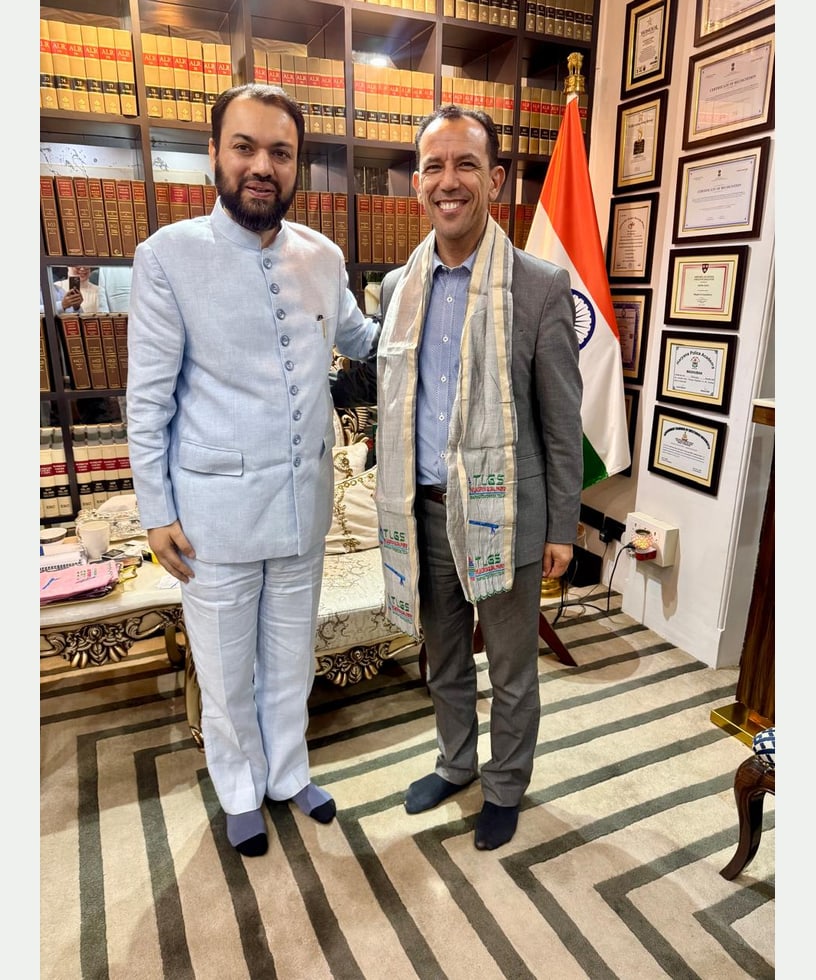
The interaction
An exchange of perspectives.
Dr. Karan Garg interacted with Dr.-Ing. Rachid Majjad on India–Oman cooperation in energy trade, potential ventures involving gas and crude-oil supply to India, and opportunities to improve commercial competitiveness. The conversation also covered Omani investment interest in India and possible avenues for wider energy-sector collaboration.
About the participant
Experience in context.
Dr.-Ing. Rachid Majjad is Chief Executive Officer of National Gas Company S.A.O.G., Oman. His corporate leadership provides an energy-industry perspective on supply partnerships, infrastructure and cross-border commercial cooperation.
Bharat Pulse Policy Lens
Competitive energy supply is a delivered-cost question.
Independent Bharat Pulse analysis, not a quotation or a position attributed to the participant.
How should a buyer compare an attractive commodity quote with a dependable supply proposition?
Policy in focus
PPAC's official import/export reporting distinguishes crude oil and petroleum-product flows by reporting period. Market-level data can inform commercial assessment but does not establish the delivered economics of a particular supply proposal.
Bharat Pulse assessment
A quoted price must be read alongside product specification, freight, terminal handling, storage, financing and the delivery window. Each element can alter whether the proposition meets a buyer's actual requirement. Supply continuity and the ability to manage disruption belong in the comparison as well; a cheaper quotation may not be the lower-risk or lower-cost choice over a complete operating cycle.
Bharat Pulse's assessment is that commercial supply and infrastructure investment should be evaluated together where one depends on the other. The critical questions are who commits capacity, who bears timing risk and whether customer demand can support the investment. India–Oman dialogue creates room to explore those questions without treating exploratory investment interest as a sovereign commitment or assuming that any supply or investment agreement has already been executed.
What to watch
Policy sources & scope
Market evidence by product and reporting period. Aggregate statistics do not establish a supplier's availability, contract terms, permissions or a particular delivered price.
Editorial review: 2026-09-20. This is the policy-lens review date, not the meeting date. Source periods are shown above; older frameworks are not presented as new announcements.