

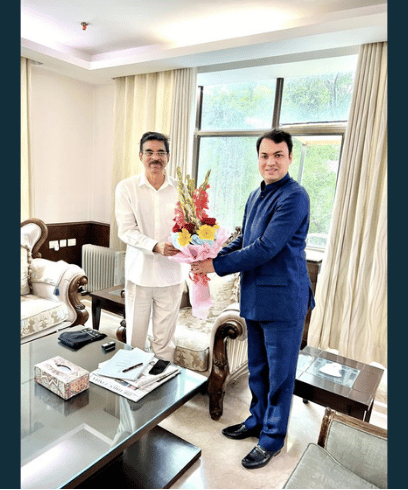
The interaction
An exchange of perspectives.
Dr. Karan Garg in an interaction with Dr. Hari Babu Kambhampati.
About the participant
Experience in context.
An engineer and former university teacher, Dr. Kambhampati’s career has connected education, parliamentary representation and constitutional office. He served as Governor of Mizoram before taking office in Odisha.
Bharat Pulse Policy Lens
PM-SETU: skills linked to industrial demand.
Independent Bharat Pulse analysis, not a quotation or a position attributed to the participant.
What makes an industry-linked training institution useful to both employers and young people?
Policy in focus
The skill ministry’s January 2026 review describes PM-SETU’s hub-and-spoke ITI model, anchor-industry partnerships and courses linked to labour-market demand. It identifies iron and steel among Odisha’s areas of specialisation.
Bharat Pulse assessment
An industrial investment can create a strong training opportunity, but a course catalogue alone is not a workforce strategy. Employers and training institutions should define the competencies, instructors, equipment access and workplace exposure required for actual roles. Apprenticeships and recruitment pathways deserve attention alongside the construction of training facilities.
For Bharat Pulse, the critical test is whether training leads to sustained employment and progression, rather than only enrolments or certificates. Industry partnerships should also protect portability of skills so that students are not dependent on one employer. This is our education-and-industry assessment, not a claim that a constitutional office manages a scheme or that any particular partnership was agreed in the interaction.
What to watch
Policy sources & scope
Published scheme architecture; not confirmation of an individual state cluster, partner selection or live tender.
Editorial review: 2026-09-18. This is the policy-lens review date, not the meeting date. Source periods are shown above; older frameworks are not presented as new announcements.