

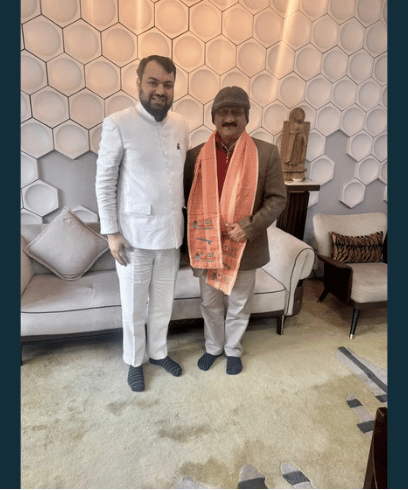
The interaction
An exchange of perspectives.
Dr. Karan Garg in an interaction with Shri Deepak Jain.
About the participant
Experience in context.
His institutional experience spans Supreme Court administration and the statutory tribunal framework, including the role of Registrar at the Mahadayi Water Disputes Tribunal.
Bharat Pulse Policy Lens
Digital justice begins with reliable records.
Independent Bharat Pulse analysis, not a quotation or a position attributed to the participant.
What makes a digital case workflow useful to parties, counsel and the institution?
Policy in focus
The Cabinet’s eCourts Phase III approval covers measures including digitisation of records, electronic filing and access through eSewa Kendras. Its stated scope should not be assumed to cover every statutory tribunal.
Bharat Pulse assessment
Digitisation is valuable only when documents remain complete, searchable and linked to the correct procedural stage. For a complex dispute, a missing annexure or conflicting version can matter more than the convenience of electronic submission. Evidence management, access controls and a reliable chronology should therefore be part of the digital design.
Bharat Pulse’s assessment is that institutions should evaluate digital systems from the user’s end-to-end journey: filing, scrutiny, listing, access to orders and correction of errors. Assisted access remains important for people unable to use online processes unaided. These are transferable administrative questions, not a claim that the Mahadayi Water Disputes Tribunal has adopted a particular eCourts component or that a specific dispute was discussed.
What to watch
Policy sources & scope
Judiciary digitisation, e-filing and access measures. It does not establish that every statutory tribunal participates in the programme.
Editorial review: 2026-09-18. This is the policy-lens review date, not the meeting date. Source periods are shown above; older frameworks are not presented as new announcements.