

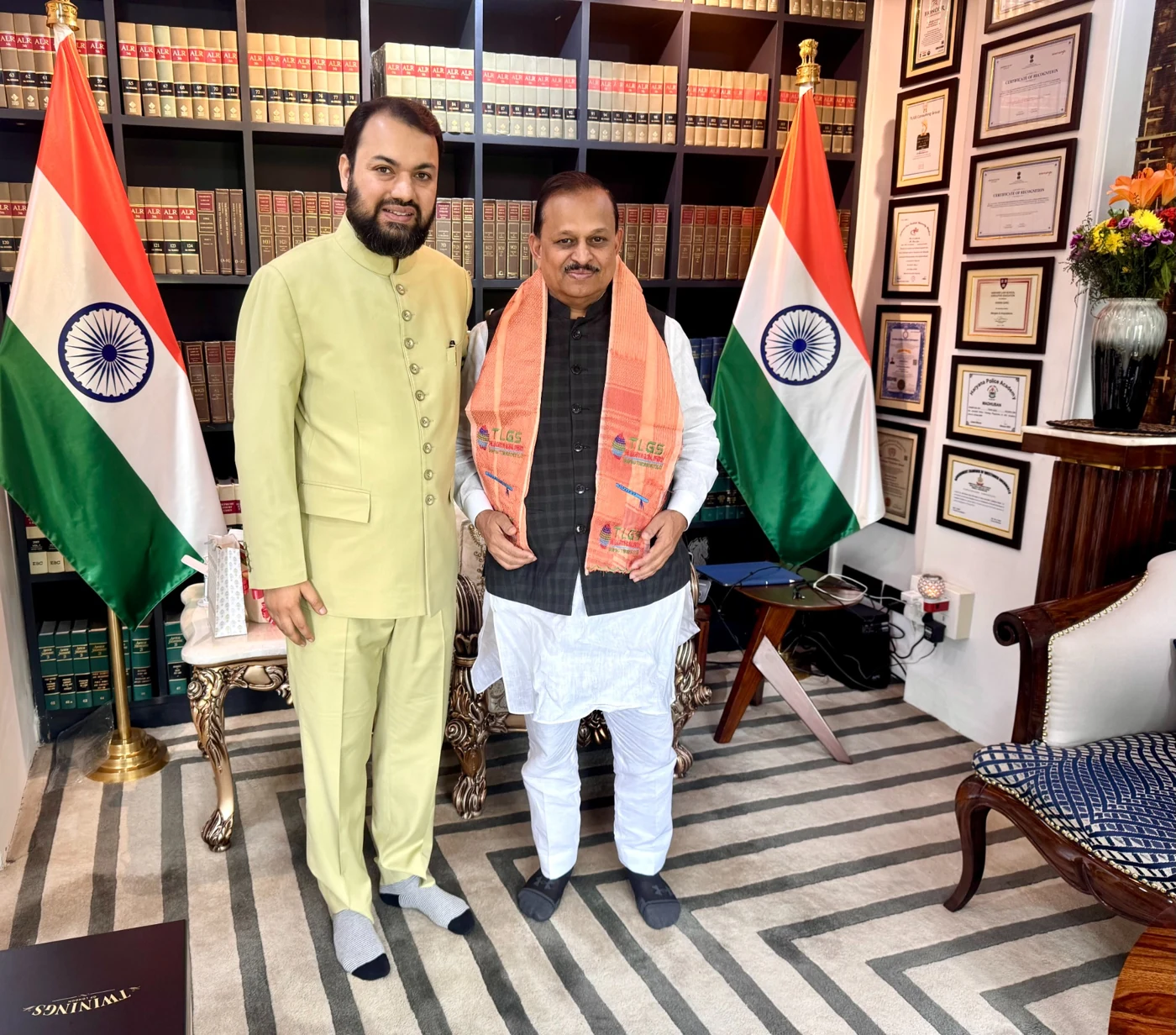
The interaction
An exchange of perspectives.
Bharat Pulse welcomed Shri Ramesh Awasthi for an interaction with Dr. Garg on 28 October 2026. Shri Awasthi represents Kanpur in the Lok Sabha and is a member of the Department-related Parliamentary Standing Committee on Commerce.
About the participant
Experience in context.
Shri Ramesh Awasthi represents Kanpur, Uttar Pradesh, in the Lok Sabha and serves on the Department-related Parliamentary Standing Committee on Commerce.
Bharat Pulse Policy Lens
Trade, Investment and the Business Environment: Turning Reform into Industrial Opportunity
Independent editorial analysis by Bharat Pulse.
India’s investment and trade ambitions depend on how effectively policy translates into the everyday experience of businesses: establishing operations, securing approvals, accessing finance, supplying customers and competing internationally.
The Parliamentary Standing Committee on Commerce’s published work provides a useful context for examining these questions. Its 200th Report, ‘Evaluation of India–US Trade Relations,’ was presented on 6 August 2026, followed by its 201st Report, ‘Doing Business in India: The Way Forward,’ on 7 August 2026. These address international market access and the domestic conditions affecting enterprise.
01Investment that builds domestic capability
Bharat Pulse’s assessment is that foreign investment should be evaluated through the productive capacity it creates. Technology partnerships, skilled employment, stronger Indian suppliers and access to international markets are useful measures of its long-term contribution. Investment strategy should therefore connect the interests of overseas investors with the capabilities and growth requirements of domestic enterprises.
02Ease of doing business measured through implementation
The 201st Report examines approval delays, overlapping compliance requirements, single-window systems and the implementation of regulatory reforms. For businesses, the practical test is whether these measures reduce uncertainty, administrative effort and the time required to begin and sustain operations.
Bharat Pulse’s view is that investment planning should map the actual sequence of permissions, infrastructure requirements and operational obligations at the outset. Predictable implementation helps turn an attractive proposal into a viable project.
03Trade policy connected to commercial decisions
The 200th Report examines tariff uncertainty, market-access barriers, export competitiveness and opportunities for investment and technology cooperation. These issues affect sourcing, pricing, production locations and overseas partnerships.
For Indian enterprises, a practical response combines market diversification, stronger product standards, reliable logistics and careful assessment of exposure to changes in international trade conditions.
04Greater participation by MSMEs and industrial clusters
Bharat Pulse sees an important opportunity in connecting smaller enterprises with larger investment projects and global supply chains. This requires attention to finance, certification, technology adoption, workforce capabilities and dependable payment arrangements.
For industrial centres such as Kanpur, the relevant question is how new investment can strengthen existing businesses while creating opportunities for expansion into higher-value products and markets.
05Confidence in procurement and digital commerce
The committee’s published meeting record includes examination of legal compliance in procurement through GeM, while its 201st Report addresses consumer protection in digital commerce. These provide a wider context for examining transparency, fair participation and effective grievance resolution.
Bharat Pulse’s assessment is that trustworthy commercial systems benefit buyers, suppliers and investors alike. Clear requirements and consistent implementation are essential to that confidence.
Relevance to TLGS’s work
These themes connect with TLGS’s advisory work in investment strategy, international collaboration, policy and regulatory analysis, industrial development and project implementation.
Across manufacturing, infrastructure, logistics, energy and technology, the practical task is to connect policy developments with specific business decisions: where to invest, how to structure a partnership, which requirements apply and how to advance a project towards execution.
Policy sources & scope
Published report summary covering market access, tariffs, investment and technology cooperation.
Published report summary covering the domestic business environment, regulatory implementation and digital commerce.
Committee membership and meeting subjects, including legal compliance in procurement through GeM.
Editorial review: 2026-11-13.