

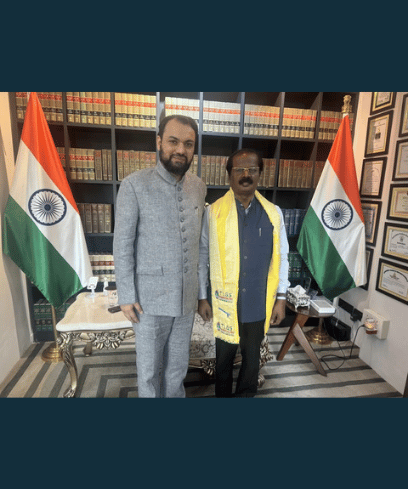
The interaction
An exchange of perspectives.
Dr. Karan Garg in an interaction with Shri T. Archunan, IRSE.
About the participant
Experience in context.
A structural and civil engineer, Shri Archunan’s experience spans Indian Railways, Kochi Metro and Chennai Metro. His CMRL responsibilities include civil works for major network expansion.
Bharat Pulse Policy Lens
Transit-oriented development: the station is only the beginning.
Independent Bharat Pulse analysis, not a quotation or a position attributed to the participant.
How can a metro investment create a connected urban place rather than an isolated transport asset?
Policy in focus
MoHUA’s published explanation of the 2017 National Transit Oriented Development Policy links mixed land use around mass-transit stations with walking, cycling, accessibility and financial viability.
Bharat Pulse assessment
A metro station can be physically complete while its catchment remains difficult to reach. Footpaths, feeder transport, safe crossings, local access and development permissions shape whether the network becomes part of everyday travel. Land monetisation should therefore be examined alongside the public realm, not as a substitute for it.
Bharat Pulse’s assessment is that engineering and urban-development decisions need a shared implementation map. Who provides the connecting road, relocates utilities, maintains pedestrian space and authorises adjoining development? For investors, the answer affects timing and risk. National policy principles do not themselves grant site-specific development rights, and this lens does not announce a CMRL concession or attribute a particular commercial model to the participant.
What to watch
Policy sources & scope
National planning principles; not site-specific development permission, an awarded concession or current local development-control rules.
Editorial review: 2026-09-18. This is the policy-lens review date, not the meeting date. Source periods are shown above; older frameworks are not presented as new announcements.