

Bharat Pulse · Intelligence & Dialogues · A TLGS platform

AI-assisted research.
Human perspectives. Institutional dialogue.

← All dialogues
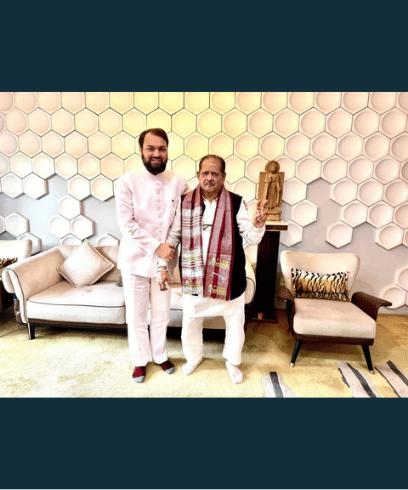
Dr. Chandrakant S. Pandav with Dr. Karan Garg during a TLGS interactionBharat Pulse Dialogues

Health, Agriculture & Inclusion

Dr. Chandrakant S. Pandav

Former Professor & Head, Centre for Community Medicine, AIIMS, New Delhi

Public health & nutrition

Roles & experience

Padma Shri (2021)WHO Public Health Champion (2017)

Bharat Pulse Policy Lens

Iodine-deficiency control is a quality-chain question.

Meetings, photographs and participation do not establish endorsement, authority to collect money or a guarantee of outcomes. Verify financial authority with TLGS →

The interaction

An exchange of perspectives.

Dr. Karan Garg in an interaction with Dr. Chandrakant S. Pandav.

About the participant

Experience in context.

Known for his contribution to iodine-deficiency control and community medicine, Dr. Pandav’s work spans research, advocacy and public-health institutions. His public service includes academic leadership at AIIMS and recognition through the Padma Shri and WHO Public Health Champion award.

Bharat Pulse Policy Lens

Iodine-deficiency control is a quality-chain question.

Independent Bharat Pulse analysis, not a quotation or a position attributed to the participant.

The policy question

How does a public-health objective remain effective from production to household access?

Policy in focus

The National Iodine Deficiency Disorders Control Programme describes surveys, iodised-salt supply, monitoring and public awareness as connected components of its population-health approach.

Bharat Pulse assessment

The institutional lesson is that an effective intervention needs more than an awareness message. Product quality, testing, distribution and monitoring should reinforce one another. Public-health programmes can lose value when the evidence, supply chain and last-mile communication are treated as separate tasks.

Bharat Pulse’s assessment is that long-term health outcomes require a reliable chain of accountability from programme design to delivery. For food-sector enterprises and development partners, that means understanding the relevant quality requirements and maintaining evidence throughout distribution. Communication should make the public purpose clear without overstating what one product or campaign can achieve. This discussion concerns population-level governance and is not individual medical, nutritional or supplementation advice.

Policy sources & scope

[1] National Iodine Deficiency Disorders Control Programme ↗Directorate General of Health Services · Official programme description; accessed September 2026

Population-health programme, monitoring and iodised-salt supply; not personal medical or dietary advice.

Editorial review: 2026-09-18. This is the policy-lens review date, not the meeting date. Source periods are shown above; older frameworks are not presented as new announcements.

Latest intelligence · TLGS Research & Perspective

What is changing. What it means for business.

Projects, policy, technology and commercial law connected to practical business decisions.

All 163 insights →

Industrial-cluster implementation and investor entry

Gaya’s manufacturing cluster: connect investor entry with infrastructure already under execution

The 1,670-acre IMC Gaya combines an approved ₹1,339-crore infrastructure project with a new investor-facilitation milestone. The October MoUs concern prospective manufacturing investment; they are separate from the cluster budget and from trunk-infrastructure contracts already appointed.

Industry, model and participation detailsManufacturing, MSME & Industrial PolicyInfrastructure & Urban DevelopmentReal Estate, Housing & LandAgriculture, Food Processing & Rural Economy

Trunk infrastructure under execution · new investor MoUs and allotment portal

26 October 2026BP-20261025-06
Read the insight →

Executive insight

India–New Zealand FTA in force: turn market access and investment promotion into transactions

Entry into force on 20 October activates a product-level utilisation agenda for Indian exporters and cross-border partners. Qualifying Indian goods gain New Zealand duty-free access, while the separate investment-promotion undertaking calls for credible private-sector projects over a 15-year horizon.

Industry, model and participation detailsTrade, Customs & Strategic Supply ChainsManufacturing, MSME & Industrial PolicyForeign PolicyAgriculture, Food Processing & Rural EconomyDigital, Telecom & ElectronicsMinistry of Commerce and Industry · Institution named in source recordDGFT · Institution named in source recordCBIC · Institution named in source recordNew Zealand Ministry of Foreign Affairs and Trade · Institution named in source recordMFAT · Institution named in source record

Agreement in force from 20 October 2026 · product and transaction conditions apply

26 October 2026BP-20260922-12
Read the insight →

Forthcoming event and publication milestone

Swavlamban 2026: prepare commercial readiness for forthcoming innovation documents

The Navy's forthcoming seminar brings industry, start-ups, academia and investors into an institutional innovation dialogue. Businesses should prepare evidence of their lawful commercial role and assess the announced documents after release, without mistaking event participation for procurement eligibility or an award.

Industry, model and participation detailsDefence, Aerospace & Homeland SecurityManufacturing, MSME & Industrial PolicyAI, Cybersecurity & Data GovernanceEducation & Skills

Seminar scheduled 26–27 October · documents announced for future release

20 October 2026BP-20261020-12
Read the insight →

Bharat Pulse · TLGS Research

Continue exploring the sector

Asset development, implementation milestones and policy context for industry.

Explore sector intelligence →

Procurement conditions are governed by the issuing authority’s notice and amendments.

Bharat Pulse brief

IndiaAI Compute: a practical access-readiness brief

Operational service guidance

The IndiaAI Compute portal sets out an access process involving registration, eligibility verification and project details. Its guidance distinguishes approved project support from the portion payable by the user.

AI, Cybersecurity & Data Governance · Digital, Telecom & Electronics · Manufacturing, MSME & Industrial Policy · Education & Skills

Project context & reference documents →
Financial approvals: Managing Director only. No cash or personal-account payments for TLGS engagements. Verify & pay safely →